
Call: 08045477657
 Send Inquiry
 Send Inquiry
VIDEO LARYNGOSCOPE
Price 85000.0 INR/ Piece
MOQ : 1 Piece
VIDEO LARYNGOSCOPE Specification
- Display Type
- Digital
- Treatment Type
- Airway intubation
- Automation Grade
- Manual
- Material
- SILVER
- Humidity Range
- 15% to 93% non-condensing
- Suitable For
- ALL
- Temperature Range
- 0C - 60C (operation); -20C - 60C (storage)
- Use
- HOSPITAL USE
- Application
- Airway management, endotracheal intubation
- Product Type
- portable
- Height
- Varies per blade size
- Storage Capacity
- Supports Micro SD (up to 32GB)
- Phase
- Single Phase
- Function
- Clear airway visualization
- Dimension (L*W*H)
- 19.6 x 7.4 x 1.3 cm (Blade), 20 x 5.2 x 2.2 cm (Handle)
- Power
- Rechargeable Lithium Battery
- Frequency
- 50/60 Hz
- Shape
- Ergonomic
- Weight
- Approx. 300 gm
- Accuracy
- HD (1280 x 720 pixels) video output
- Properties
- High-Definition Camera, Reusable/Disposable Blades, Anti-fog, Lightweight
- Color Code
- WHITE/ PINK
- Power Source
- Battery powered
- Voltage
- 3.7V
- Display
- 3.5 inch LCD
- Video Output
- AV/USB
- Camera Angle
- 60 field of view
- Charging Time
- Approx. 2 hours
- Blade Material
- Stainless Steel/Medical Polycarbonate
- Battery Backup
- Approx. 3-4 hours continuous use
- Waterproof Grade
- IPX7 (blade only)
- Data Transfer
- USB/SD card
- Image Capturing
- Photo and Video Recording
- Illumination
- LED Light Source
VIDEO LARYNGOSCOPE Trade Information
- Minimum Order Quantity
- 1 Piece
- Supply Ability
- 5 Pieces Per Day
- Delivery Time
- 5 Days
About VIDEO LARYNGOSCOPE
Things to Look for / Key Specifications
When evaluating video laryngoscopes, consider:
| Feature | Why It Matters |
|---|---|
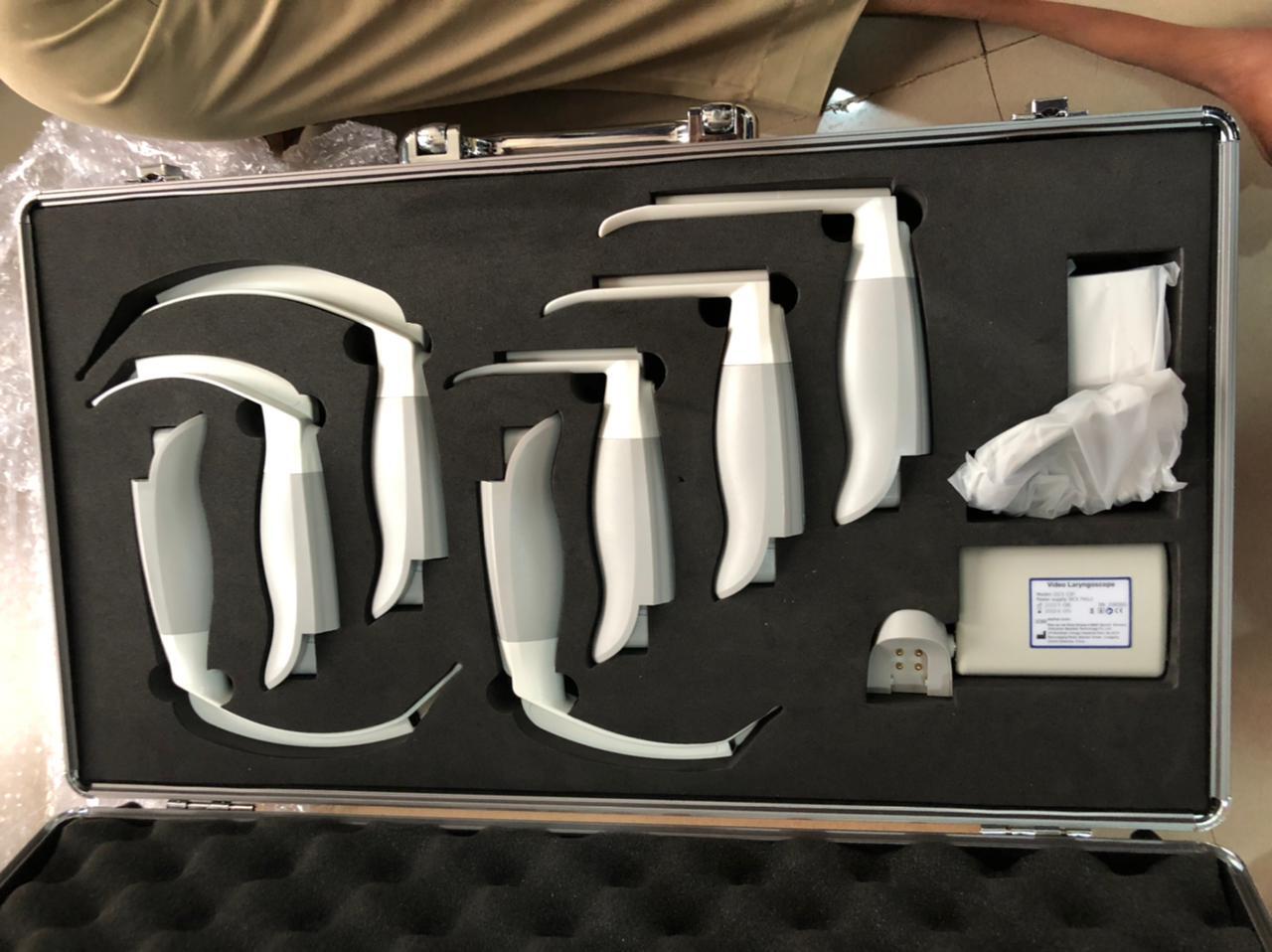
| Blade types & sizes | Must support adult, pediatric, perhaps neonatal blades. |
| Reusable vs disposable blades | Reusable blades reduce cost but need sterilization. |
| Camera specs | Resolution, frame rate (e.g. 2 megapixels, 30 fps), field of view angle etc. |
| Display / monitor | Size, resolution, detachable vs fixed, rotational mounting. |
| Illumination / LED brightness | Sufficient lighting, anti-fog, good LED. |
| Battery / power | Battery life, rechargeability, backup power. |
| Recording / data storage | Ability to save images/video, memory card, export. |
| Durability & sterilizability | Blade material (e.g. stainless steel), waterproof, sterilizable. |
| Ergonomics & ease of use | Weight, handle grip, intuitive operation. |
Versatile and Durable Design
Engineered for both hospital and clinical settings, the Video Laryngoscope utilizes robust materials like stainless steel and medical-grade polycarbonate for its blades, ensuring durability and hygiene. The ergonomic handle and varied blade sizes, coupled with a lightweight construction (approx. 300 gm), offer comfort and versatility for diverse procedures.
Advanced Visualization and Recording
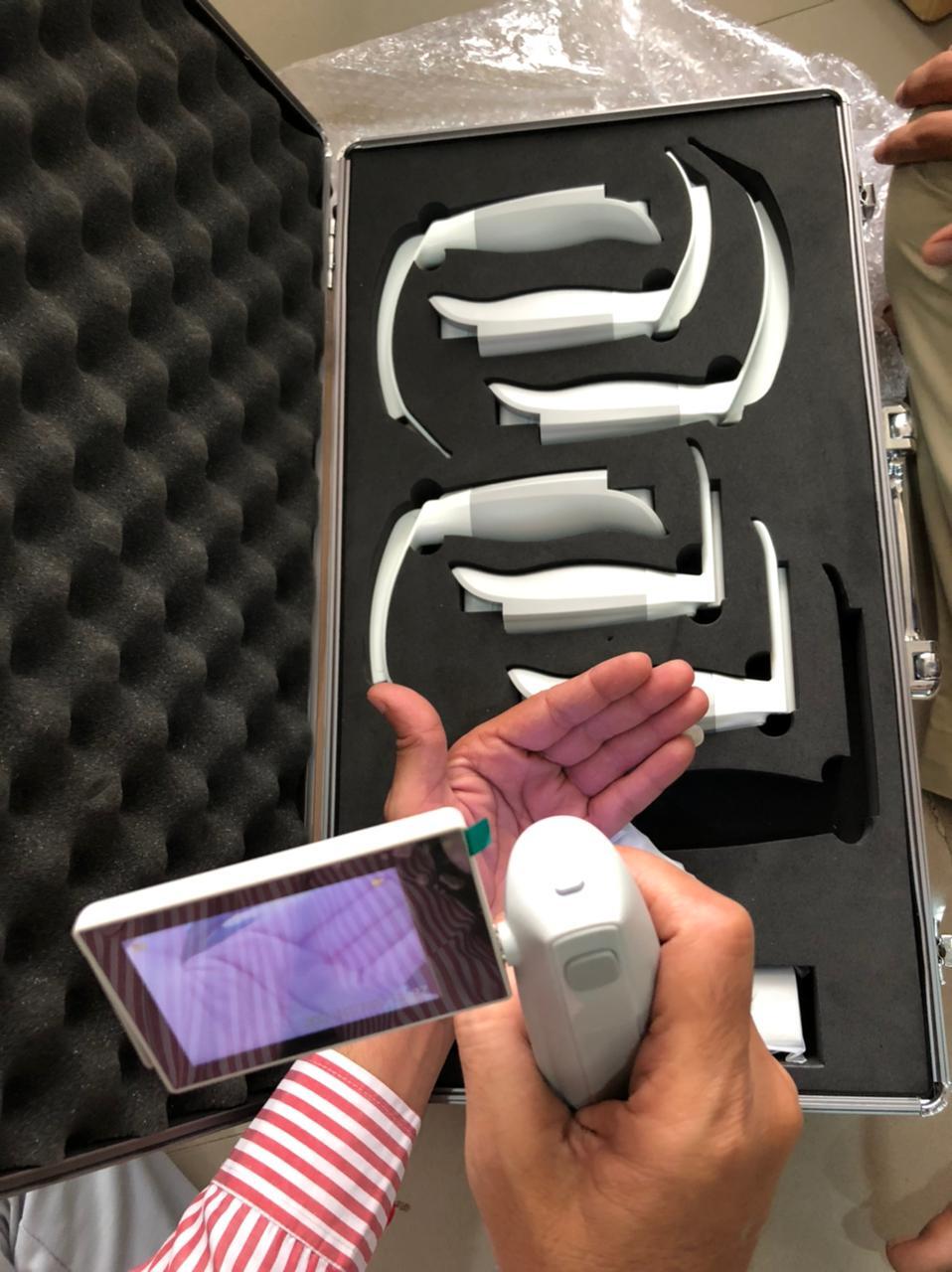
Featuring a high-definition (1280 x 720 pixels) camera and LED illumination, the device delivers a clear, 60-degree field of view for accurate airway visualization. Photo and video recording functionalities allow seamless documentation, with storage capacity up to 32GB on Micro SD. Real-time display on a 3.5-inch LCD ensures reliable intubation and procedure efficiency.
Reliable Power and Safety
The laryngoscope is powered by a rechargeable lithium battery, offering continuous operation for approximately 34 hours with a quick 2-hour recharge time. The blade is IPX7 waterproof, supporting rigorous cleaning protocols. Designed to work in a wide humidity (1593%) and temperature range (0C - 60C operational), it ensures consistent functionality in various environments.
FAQs of VIDEO LARYNGOSCOPE:
Q: How is the Video Laryngoscope used for airway management and intubation?
A: The Video Laryngoscope is designed for clear airway visualization and endotracheal intubation. Simply select the appropriate blade size, power on the device, and use the anti-fog, high-definition camera for a precise view during the procedure. Its ergonomic design and LED illumination allow clinicians to perform intubations efficiently and safely.Q: What materials are used in the blades, and can they be reused?
A: The device offers blades made of either medical-grade stainless steel or polycarbonate. Both reusable and disposable blade options are available, providing flexibility according to hospital protocols. The stainless steel ensures durability, while polycarbonate offers lightweight convenience.Q: When should the battery be recharged, and what is its runtime?
A: The Video Laryngoscopes rechargeable lithium battery provides approximately 3-4 hours of continuous use per charge. It is recommended to recharge the device after each use or when the battery is low, which takes around 2 hours to reach full capacity.Q: Where can images and video recordings be stored and transferred?
A: All captured images and videos can be conveniently stored on a Micro SD card (up to 32GB supported) or transferred via USB to a computer or other storage device, streamlining documentation and data sharing for clinical records.Q: What are the benefits of the devices high-definition camera and anti-fog properties?
A: The high-definition camera with a 60 field of view provides sharp, accurate visualization during intubation, while the anti-fog feature ensures a consistently clear view, minimizing delays and enhancing patient safety.Q: Is the laryngoscope blade waterproof, and how should it be cleaned?
A: Yes, the blade carries an IPX7 waterproof rating, meaning it can be submerged in water up to 1 meter for up to 30 minutes, facilitating thorough cleaning and disinfection between uses.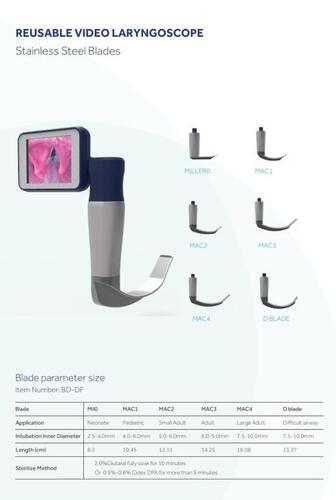
Tell us about your requirement

Price:
Quantity
Select Unit
- 50
- 100
- 200
- 250
- 500
- 1000+
Additional detail
Mobile number
Email

More Products in Medical Equipments Category
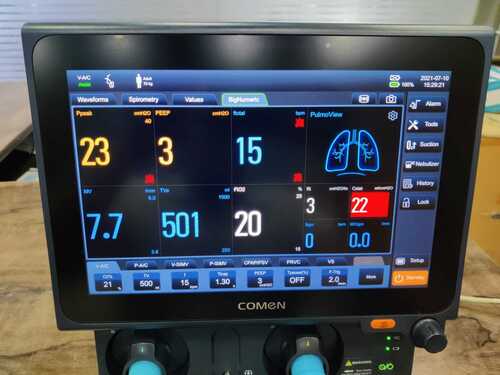
COMEN VENTILATOR V3
Price 600000.0 INR / Piece
Minimum Order Quantity : 1 Piece
Application : ICU USE
Use : HOSPITAL USE
Color Code : BLAC & WHITE
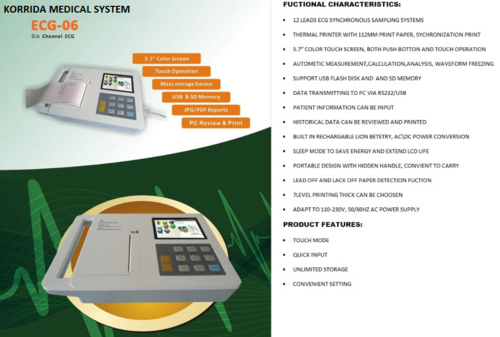
6 Channel ecg machine
Price 36000.0 INR / Piece
Minimum Order Quantity : 1 Piece
Application : Cardiac Diagnostic
Use : Recording Electrocardiograms
Color Code : WhiteGrey
Suitable For : Hospital, Clinic, Ambulance
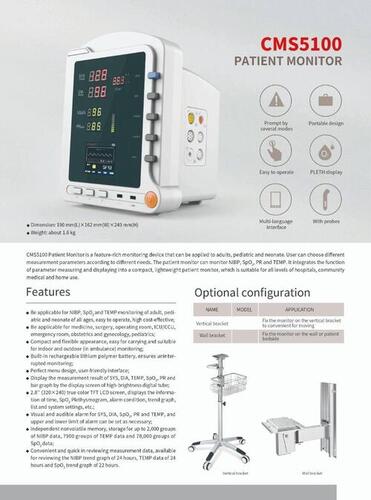
TABLETOP PULSE OXIMETER CMS-5100
Price 15000.0 INR / Piece
Minimum Order Quantity : 1 Piece
Application : Patient Monitoring, ICU, Operation Theatre, Clinics, Ambulance
Use : Noninvasive continuous monitoring of arterial oxygen saturation and pulse rate
Color Code : White and Blue
Suitable For : Adult, Pediatric, Neonatal
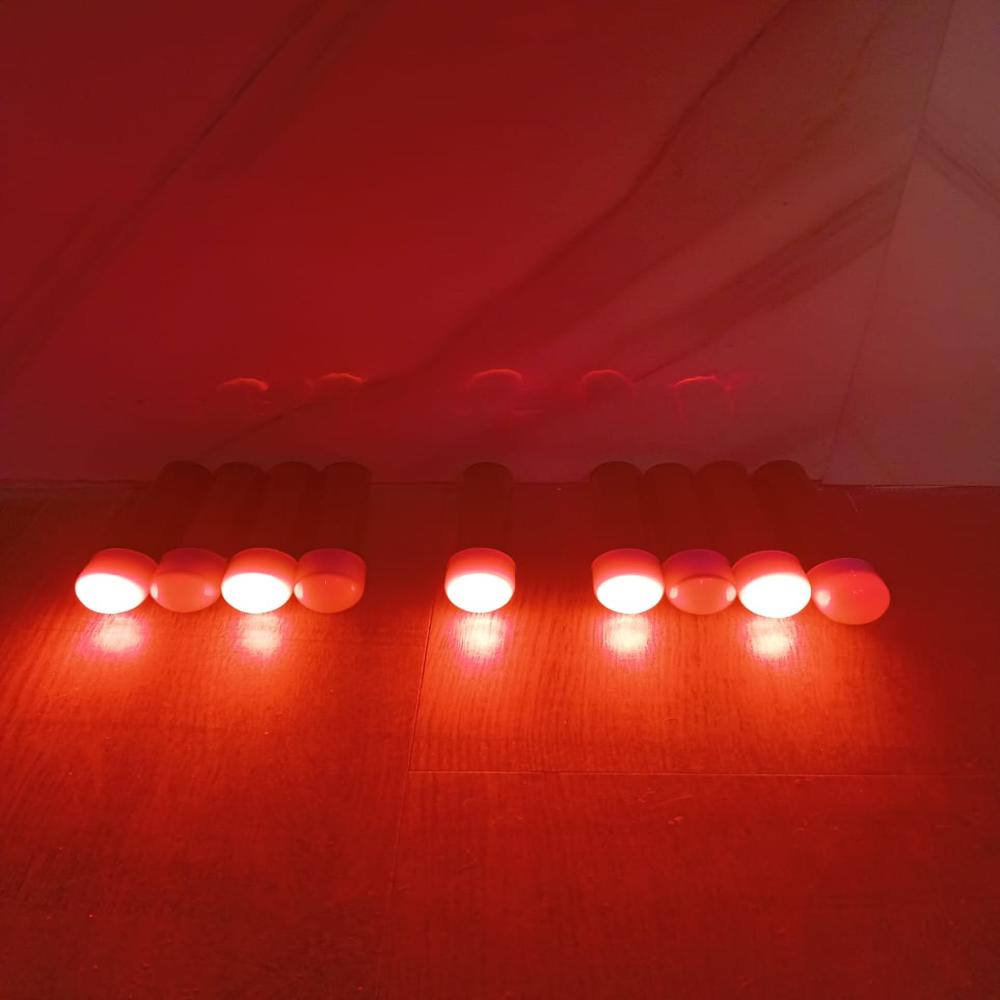
VEIN FINDER VEIN -D
Price 1200.0 INR / Piece
Minimum Order Quantity : 1 Piece
Application : VEIN DETECTOR
Use : HOSPITAL USE
Color Code : BLAK
Suitable For : HOSPITAL

Contact Details
Surat, Gujarat, India
- No-376, Ranuja Dham Soc., BM,Surat - 395010, Gujarat, India
- Phone :08045477657
 Send Inquiry
|


Developed and Managed by Infocom Network Private Limited.
