
Call: 08045477657
 Send Inquiry
 Send Inquiry
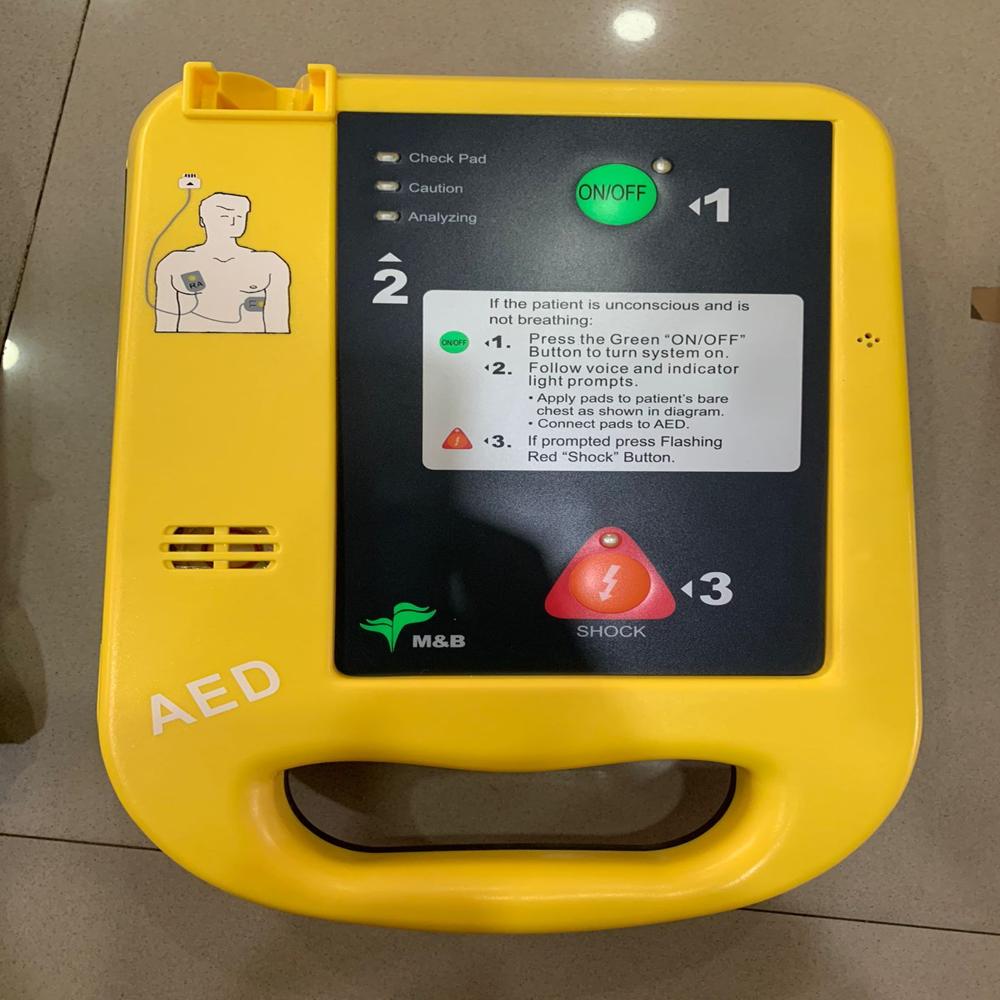
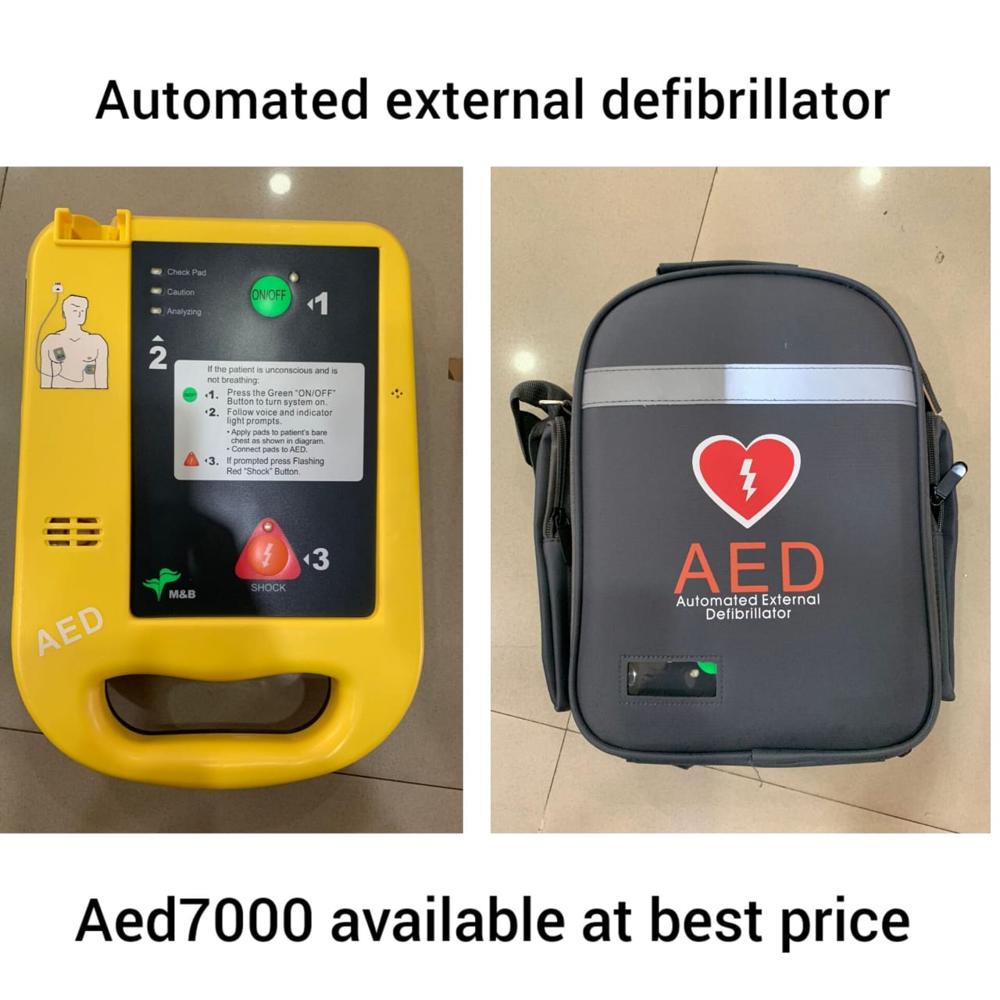
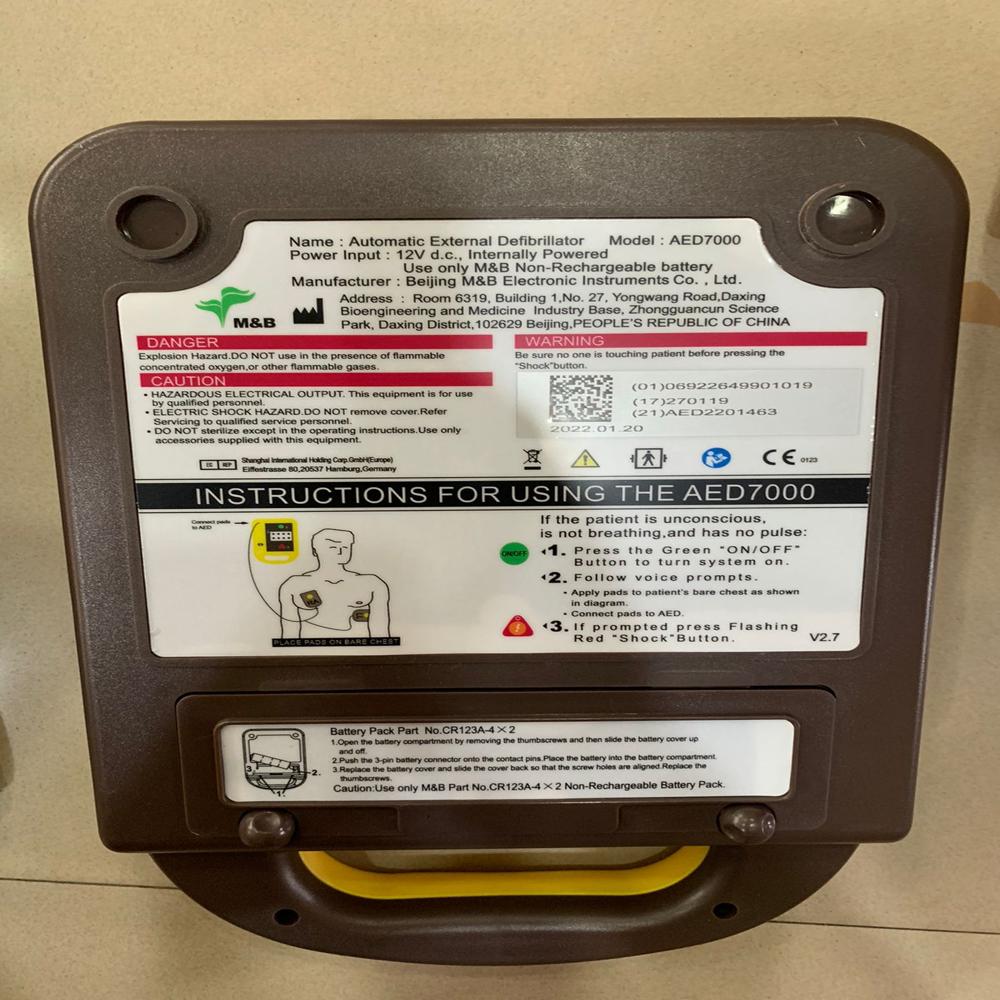
AED-7000 (Autometic external defibrillator )
Price 55000.0 INR/ Piece
MOQ : 5 Pieces
AED-7000 (Autometic external defibrillator ) Specification
- Temperature Range
- Operating: 0C ~ 40C, Storage: -20C ~ 55C Celsius (oC)
- Weight
- Approx 2.5 kg (including battery) Kilograms (kg)
- Phase
- Single Phase
- Product Type
- Automatic External Defibrillator
- Display Type
- Visual and Audio Prompts
- Function
- Automated External Defibrillation
- Color Code
- Yellow/Grey
- Suitable For
- Hospitals, Public Places, Emergency Responders
- Humidity Range
- 0% 95% (non-condensing)
- Material
- ABS Plastic
- Dimension (L*W*H)
- 300 x 230 x 70 mm Millimeter (mm)
- Frequency
- 50-60 Hz Hertz (HZ)
- Power
- DC 12V / Battery Operated Volt (v)
- Automation Grade
- Fully Automatic
- Properties
- Portable, User-Friendly Interface
- Shape
- Portable Rectangular Unit
- Use
- Cardiopulmonary Resuscitation (CPR)
- Treatment Type
- Biphasic Truncated Exponential
- Height
- 70 mm Millimeter (mm)
- Application
- Sudden Cardiac Arrest Emergency
- Power Source
- Lithium Battery
- Display
- LCD / LED Status Display
- Voltage
- 12V DC Volt (v)
- Pad Type
- Adult and Pediatric compatible
- Voice Prompts
- Clear, step-by-step audio instructions
- Electrode Cable Length
- 1.2 meters
- Water Resistance
- IPX4 rating
- Event Documentation
- Internal memory with USB download capability
- Languages Supported
- Multi-language (English default)
- Battery Working Life
- 5 years in standby mode
- Self-Test
- Daily/Weekly/Monthly automatic self-test
- Time to Shock
- < 10 seconds
- Standby Mode
- Visual and audible indicator
- Energy Output
- 150J - 360J (selectable/automatic escalation)
- ECG Analysis Time
- < 5 seconds
AED-7000 (Autometic external defibrillator ) Trade Information
- Minimum Order Quantity
- 5 Pieces
- Supply Ability
- 1000 Pieces Per Month
- Delivery Time
- 7 Days
About AED-7000 (Autometic external defibrillator )
| Feature | Specs / Description |
|---|
| Defibrillation Output | Biphasic truncated exponential waveform winterthurmedical.com+4Medikart+4Brain Wave Medisystem Pvt. Ltd+4 |
| Energy Sequence | 150J 150J 200J RespBuy+4Medikart+4Brain Wave Medisystem Pvt. Ltd+4 |
| Charge Time | 8 sec to 150J; 10 sec to 200J with new battery RespBuy+4Medikart+4Brain Wave Medisystem Pvt. Ltd+4 |
| Analysis Time | 9 sec Medikart+2Brain Wave Medisystem Pvt. Ltd+2 |
| Battery / Power | 12V, 3.0 Ah non-rechargeable lithium battery (CR123A 4 2) Hospital Store+5Medikart+5Biomeddy+5 |
| Capacities / Discharges | 100 discharges at 200J, or 120 at 150J Medikart+4Biomeddy+4Brain Wave Medisystem Pvt. Ltd+4 |
| Self-test / Readiness | Weekly self-test, event recording, lock-out protection MedicalExpo+4Medikart+4Brain Wave Medisystem Pvt. Ltd+4 |
| Dimensions / Weight | 303 216 89 mm; 2 kg docuses.com+4Medikart+4Biomeddy+4 |
| Operating Conditions | 0 to 40 C; humidity 30%-95% non-condensing |
Reliable and Rapid Defibrillation
The AED-7000 delivers a shock in less than 10 seconds after ECG analysis, providing swift intervention for sudden cardiac arrest. With selectable or automatic escalation from 150J to 360J, the device tailors energy levels to patient requirements, maximizing the chance of successful resuscitation for both adults and children.
Designed for Ease of Use and Portability
Crafted from durable ABS plastic in a distinct yellow/grey color, the AED-7000 weighs only 2.5 kg. Its intuitive interface, clear step-by-step audio prompts, and visual indicators make operation straightforward for both professionals and lay responders, ensuring immediate action during emergencies.
Comprehensive Event Recording and Monitoring
The AED-7000 internally stores data from up to 100 incidents or 15 hours of ECG, which can be downloaded via USB for further analysis. Automatic self-tests and clear status displays guarantee device readiness and reliability, making it well-suited for continuous deployment in public and healthcare settings.
FAQs of AED-7000 (Autometic external defibrillator ):
Q: How does the AED-7000 guide users during a cardiac emergency?
A: The AED-7000 provides clear, step-by-step audio instructions in multiple languages (English default), along with visual prompts via its LCD/LED display. These guidance features ensure that users of varying experience levels can quickly and confidently operate the device during an emergency.Q: What is the process for using the AED-7000 on adults and children?
A: The AED-7000 comes with pads compatible for both adult and pediatric patients. Simply connect the appropriate pad, turn on the device, and follow the voice and visual instructions. The AED automatically analyzes the patients ECG and delivers the correct energy level for each age group.Q: When should the AED-7000 be used and who can operate it?
A: The AED-7000 should be used immediately when a person shows signs of sudden cardiac arrestunresponsiveness and abnormal breathing. Its automated interface is designed for rapid use by emergency responders, hospital staff, or even bystanders in public places, thanks to simple prompts and minimal setup.Q: Where is the AED-7000 suitable for deployment?
A: The AED-7000s portable design, robust water resistance (IPX4), and long standby battery life make it ideal for hospitals, public spaces, emergency vehicles, or community centers. Its compact size and lightweight build also facilitate easy transport and visible placement in high-traffic areas.Q: What is the benefit of the AED-7000s event documentation capabilities?
A: The AED-7000 can internally record up to 100 incidents or 15 hours of ECG data. This information is crucial for post-event medical review and training, and is easily accessible via USB download, ensuring compliance and improvement in emergency care protocols.Q: How is the AED-7000 maintained for reliable use?
A: Automatic daily, weekly, and monthly self-tests check key internal systems, electrodes, and battery life. Visual and audible standby indicators notify users of device readiness, ensuring the AED-7000 is always prepared for immediate use in emergencies.Q: What are the advantages of having selectable or automatic energy escalation in the AED-7000?
A: Selectable or automatic escalation of energy output (150J 360J) allows the AED-7000 to deliver optimal therapy, increasing shock intensity when necessary. This feature enhances patient outcomes by tailoring treatment to individual needs, especially in challenging cases.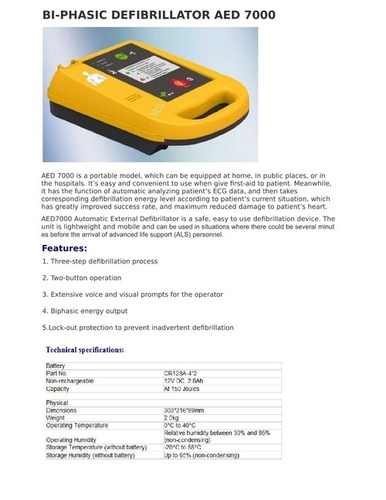
Tell us about your requirement

Price:
Quantity
Select Unit
- 50
- 100
- 200
- 250
- 500
- 1000+
Additional detail
Mobile number
Email

More Products in Defibrillator Category
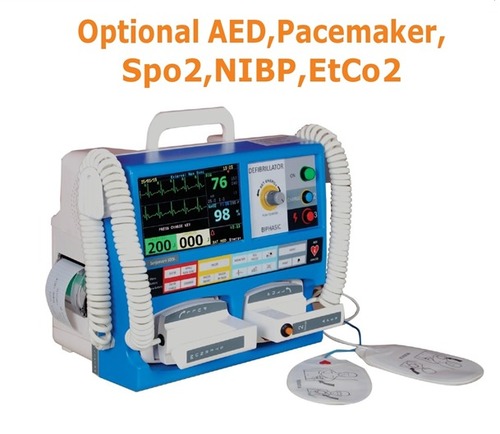
Bi-Phasic Defibrillator
Price 180000.0 INR / Piece
Minimum Order Quantity : 1 Piece
Material : Plastic and Metal
Suitable For : Hospitals ICUs ambulances
Product Type : Defibrillator
Color Code : Blue and White
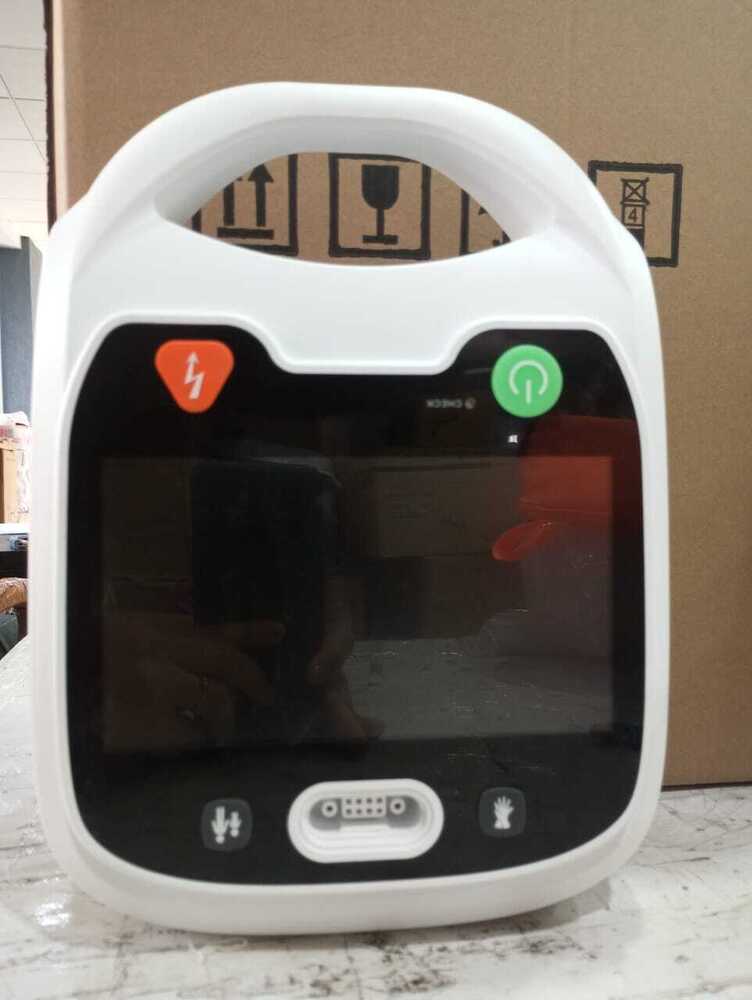
Automated External Defibrillator
Price 40000.0 INR / Piece
Minimum Order Quantity : 1 Piece
Material : PLASTIC
Suitable For : HOSPITAL
Product Type : MEDICAL
Color Code : ORANGE WHITE

Contact Details
Surat, Gujarat, India
- No-376, Ranuja Dham Soc., BM,Surat - 395010, Gujarat, India
- Phone :08045477657
 Send Inquiry
|


Developed and Managed by Infocom Network Private Limited.
