
Call: 08045477657
 Send Inquiry
 Send Inquiry
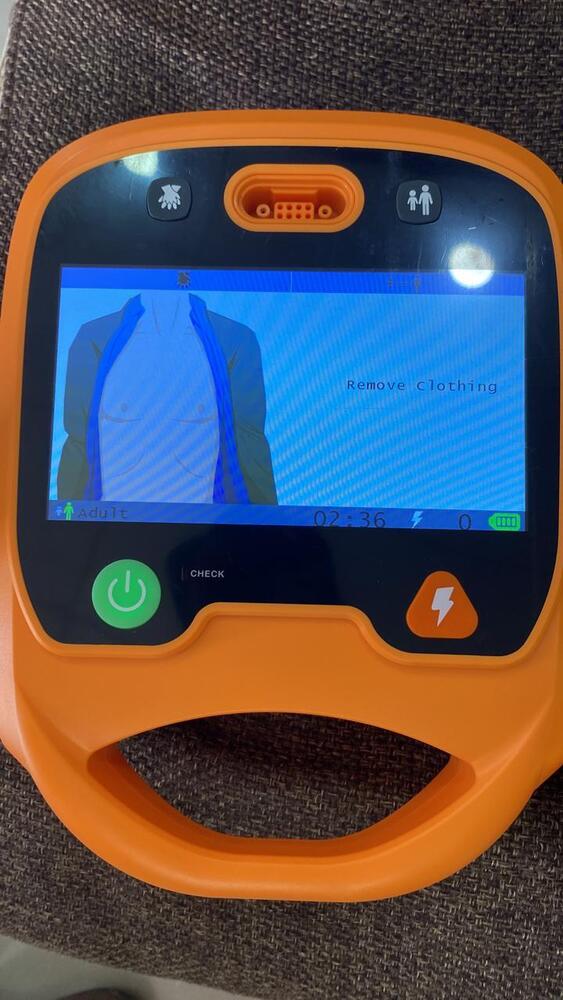
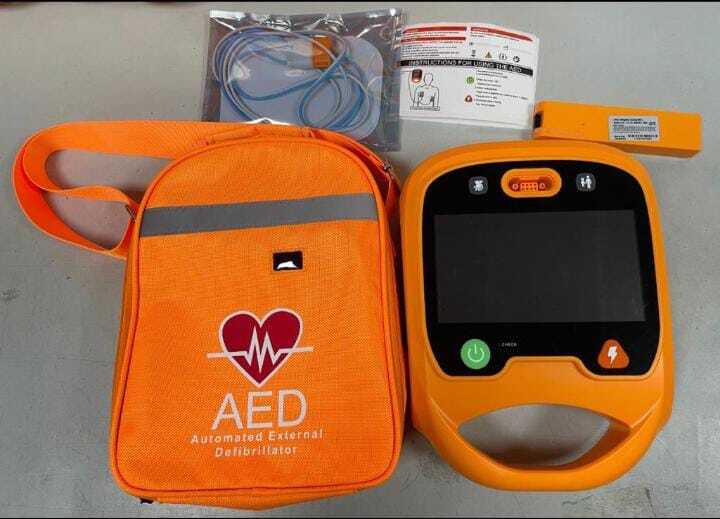
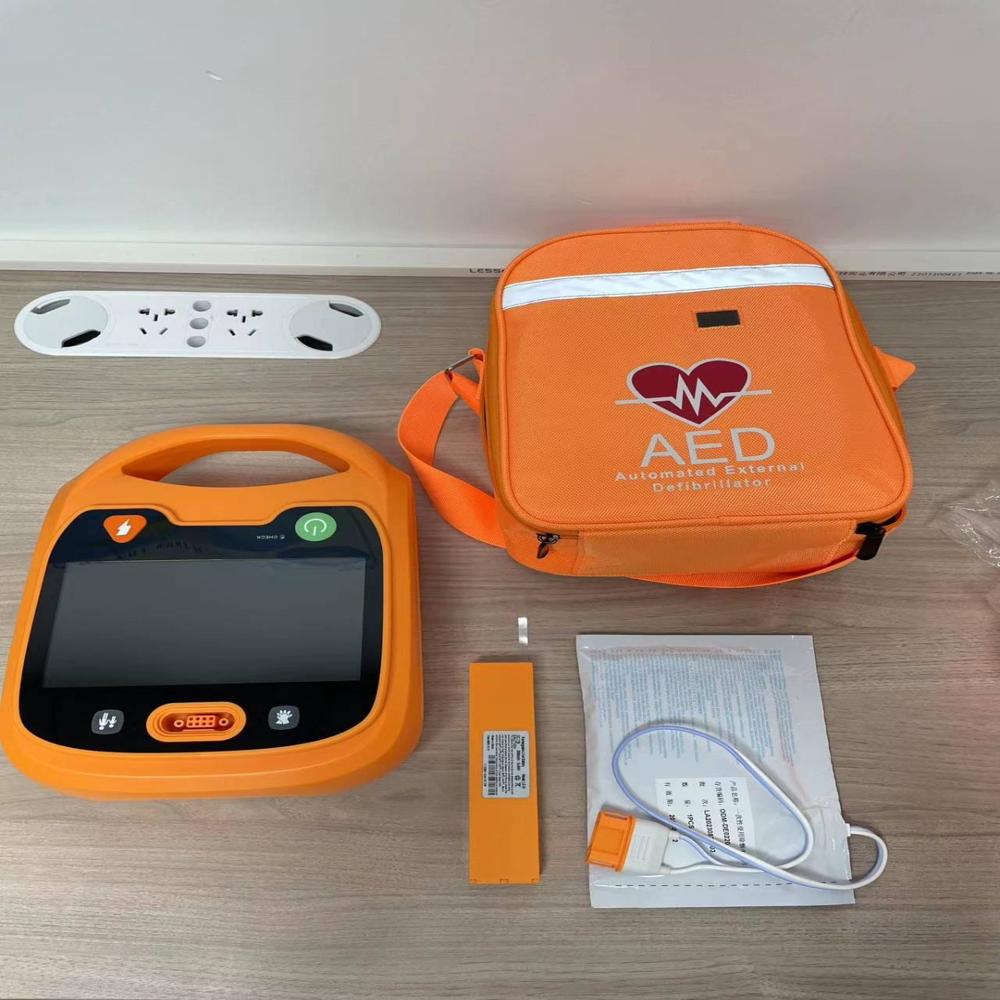
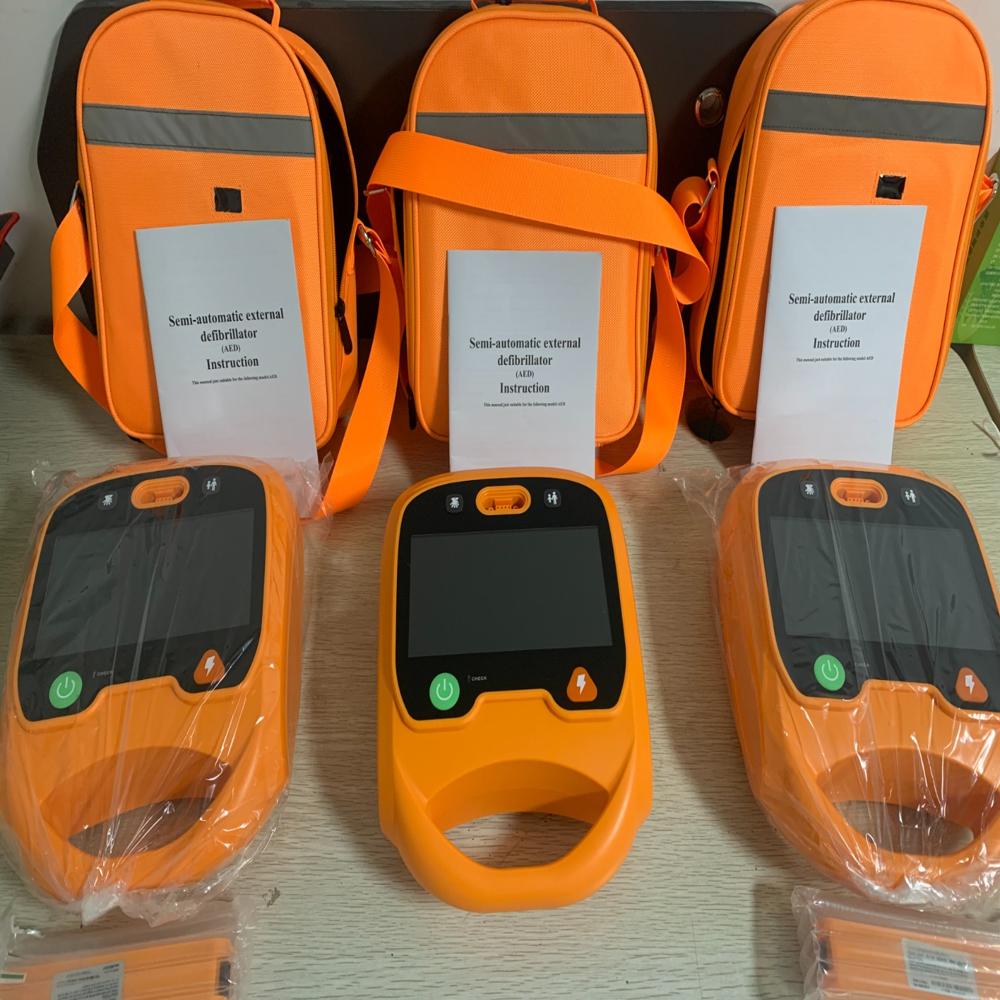
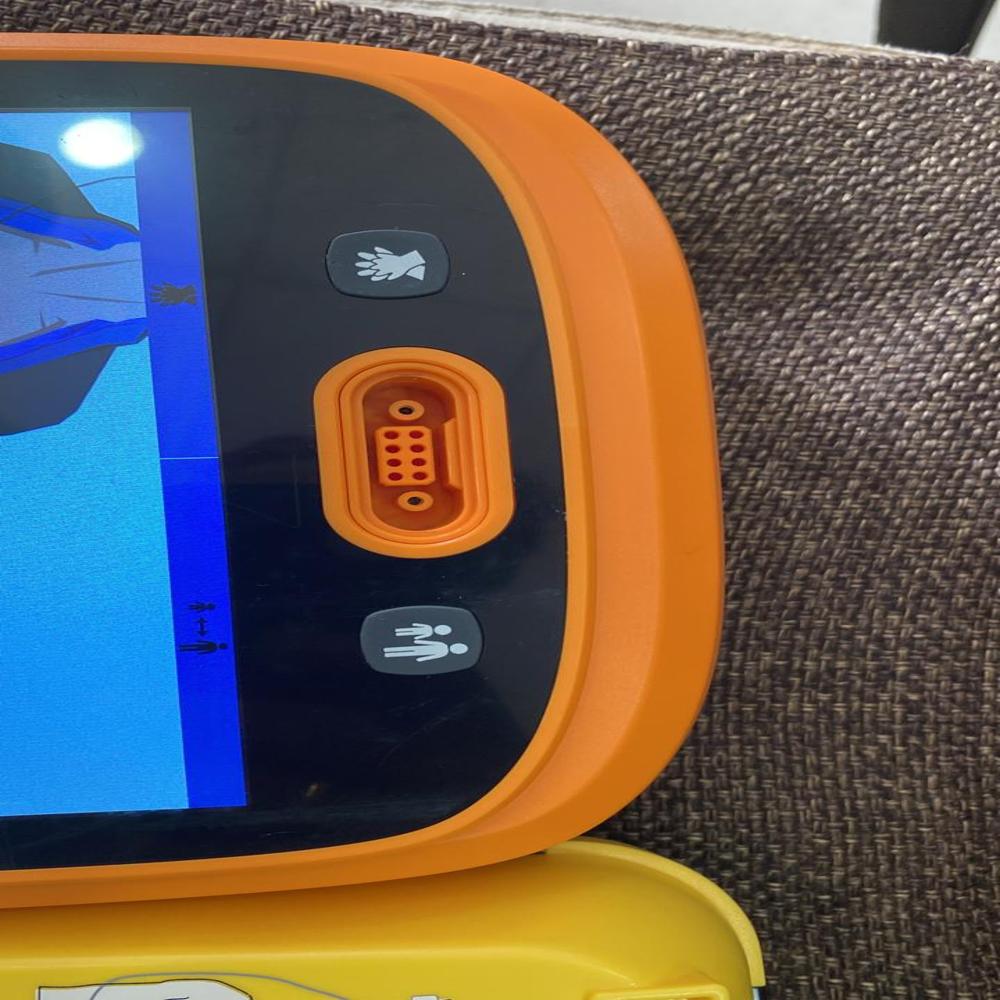
Automated External Defibrillator
Price 40000.0 INR/ Piece
MOQ : 1 Piece
Automated External Defibrillator Specification
- Use
- HOSPITAL USE
- Dimension (L*W*H)
- 52*25*26 Inch (in)
- Product Type
- MEDICAL
- Material
- PLASTIC
- Color Code
- ORANGE WHITE
- Warranty
- 1 YEAR WARRENTY
- Suitable For
- HOSPITAL
Automated External Defibrillator Trade Information
- Minimum Order Quantity
- 1 Piece
- Payment Terms
- Cash in Advance (CID)
- Supply Ability
- 100 Pieces Per Day
- Delivery Time
- 7 Days
- Main Export Market(s)
- Asia, North America, South America, Australia, Central America, Eastern Europe, Western Europe, Middle East, Africa
- Main Domestic Market
- All India, South India, Central India, West India, North India, Haryana, Himachal Pradesh, Jammu and Kashmir, Madhya Pradesh, Sikkim, Tamil Nadu, West Bengal, Bihar, Chandigarh, Daman and Diu, Goa, Odisha, Punjab, Assam, Delhi, Dadra and Nagar Haveli, Andaman and Nicobar Islands, Arunachal Pradesh, Chhattisgarh, East India, Uttarakhand, Maharashtra, Nagaland, Rajasthan, Telangana, Pondicherry, Uttar Pradesh, Gujarat, Karnataka, Kerala, Lakshadweep, Mizoram, Meghalaya, Manipur, Andhra Pradesh, Jharkhand, Tripura
About Automated External Defibrillator
2 Medical Device AED 8000 Concept
Automated External Defibrillator AED A concept model or design for a defibrillator priced around AED 8000
Innovation Concept Developing an advanced costeffective AED with new features such as AI integration remote monitoring or portability
Engineered for Hospital Professionals
Crafted for the fast-paced hospital environment, this AED ensures swift access during cardiac emergencies. The robust plastic housing resists frequent handling and is easy to sanitize. Its orange-white coloration means it can be quickly located in critical moments, and its generous dimensions allow convenient storage and accessibility in varied hospital layouts.
Peace of Mind with Reliable Warranty
Enjoy a one-year warranty that underscores our confidence in this AEDs performance. Hospitals can rest assured knowing that support is available if any manufacturer defects arise, enhancing trust in emergency preparedness. Commitment to quality is reflected in both product design and after-sales support.
FAQs of Automated External Defibrillator:
Q: How is the Automated External Defibrillator used in a hospital setting?
A: The AED is deployed during sudden cardiac arrest incidents in hospitals. Medical staff position the pads as directed by the device, follow the automated prompts, and deliver a shock if the AED indicates it is necessary, all while maintaining patient safety protocols.Q: What material is the AED constructed from and why?
A: This AED is made from high-quality plastic, chosen for its durability, ease of cleaning, and lightweight nature, making it suitable for frequent use in demanding hospital environments.Q: When should hospital staff use this AED?
A: The AED should be utilized immediately upon recognizing cardiac arrest in a patient. Early defibrillation is critical for improving survival rates, so prompt application is essential for optimal outcomes.Q: Where should the AED be placed within a hospital for maximum utility?
A: For best accessibility, the device should be located in high-traffic or critical care areas such as emergency rooms, ICUs, and near nurses stations, ensuring it can be quickly retrieved in emergencies.Q: What is the process for maintaining and servicing the AED?
A: Regular checks should be scheduled to ensure battery life, pad integrity, and device functionality. The included one-year warranty covers manufacturer defects, and trained staff should oversee periodic inspections and maintenance schedules.Q: How does using this AED benefit hospital response teams?
A: This AED streamlines the resuscitation process with user-friendly, automated guidance, reducing response time and increasing the chance of patient survival during cardiac arrests. The device enhances workflow efficiency and aids in meeting hospital safety standards.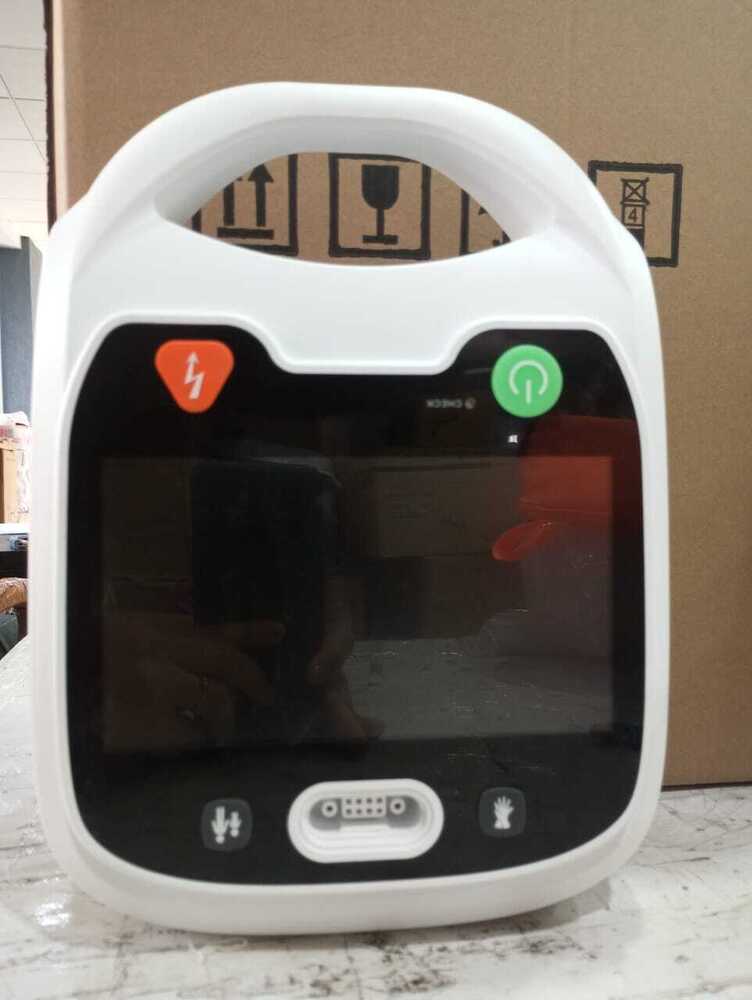
Tell us about your requirement

Price:
Quantity
Select Unit
- 50
- 100
- 200
- 250
- 500
- 1000+
Additional detail
Mobile number
Email

More Products in Defibrillator Category
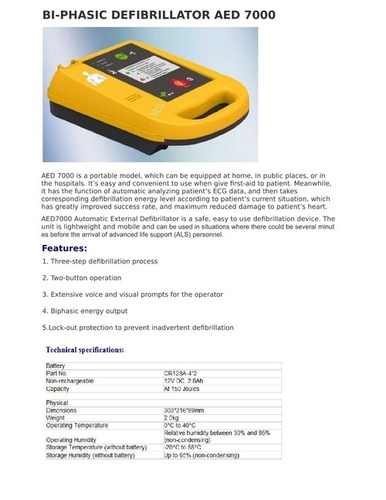
AED-7000 (Autometic external defibrillator )
Price 55000.0 INR / Piece
Minimum Order Quantity : 5 Pieces
Use : Cardiopulmonary Resuscitation (CPR)
Suitable For : Hospitals, Public Places, Emergency Responders
Color Code : Yellow/Grey
Properties : Portable, UserFriendly Interface
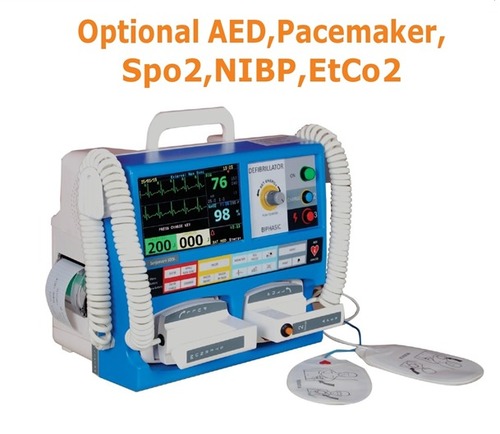
Bi-Phasic Defibrillator
Price 180000.0 INR / Piece
Minimum Order Quantity : 1 Piece
Use : Medical use for cardiac resuscitation and monitoring
Suitable For : Hospitals ICUs ambulances
Color Code : Blue and White
Properties : Multifunctional medical device for emergency and critical care settings

Contact Details
Surat, Gujarat, India
- No-376, Ranuja Dham Soc., BM,Surat - 395010, Gujarat, India
- Phone :08045477657
 Send Inquiry
|


Developed and Managed by Infocom Network Private Limited.
